
I didn’t set out to completely rethink how I parent. But about a year ago, I came across the term pathological demand avoidance, or what I now think of as a pervasive drive for autonomy, and it quietly unraveled everything I thought I knew.
Looking back, I don’t know how I was getting through the day before I found the resources and support I now rely on. Not because things suddenly became easy, but because I finally had a framework that made sense of what I was seeing.
If you’re here, you’re probably in that same place, trying to figure out why nothing seems to work the way it’s “supposed to,” and why your child seems to push back against even the smallest things. PDA isn’t just “strong-willed” or “defiant.” It asks you to step out of the traditional parenting scripts entirely and move toward something much more flexible, much more relational, and much more rooted in nervous system safety.
For me, that meant slowly letting go of control, expectations, and even some of the gentle parenting tools I once leaned on, and replacing them with approaches that prioritize connection, autonomy, and co-regulation.
What I’m sharing below aren’t quick fixes or one-size-fits-all answers. These are the resources I keep coming back to, especially when things feel hard, confusing, or overwhelming. They’ve helped me understand my child, but just as much, they’ve helped me understand myself.
Learn more about what PDA really is
1. The PDA Safe Circle: Understanding Neurodiversity through the Safe Circle Approach
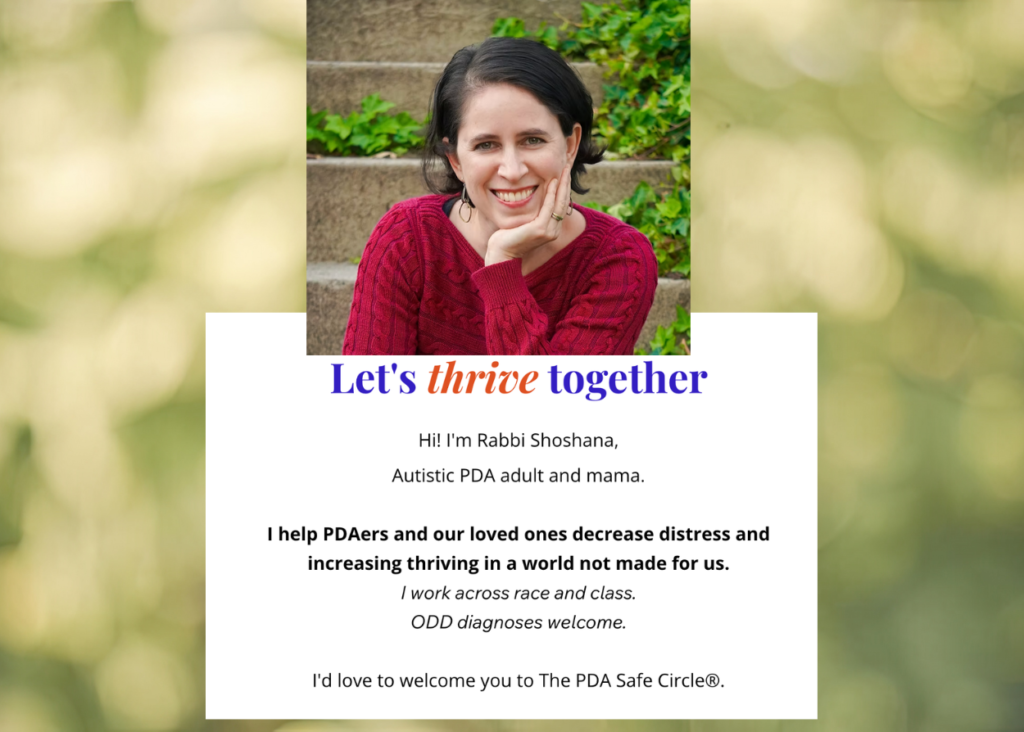
Rabbi Shoshana’s PDA Safe Circle work didn’t just change how I respond to my child, it changed how I understand what’s actually happening underneath the behaviors. She speaks about capacity, safety, and demands through a nervous system lens, often grounded in polyvagal theory, but in a way that feels deeply human and lived, not clinical.
What makes her work especially powerful is that she isn’t speaking from the outside. She is autistic and PDA herself, and her son is as well. She openly shares about moving through burnout, and the very real process of stepping back from the pace and expectations of the world to create a life that is more sustainable. She now spends her days at home with her son, and sometimes he even joins her during weekly office hours. There’s something about that, seeing the life she’s built alongside the work she teaches, that makes it all feel real and possible.
Her concept of the Safe Circle centers around understanding where true capacity exists, for both the child and the parent, and recognizing how quickly demands can push someone outside of that space. It’s not about managing behavior. It’s about honoring nervous system limits and creating conditions where safety can actually be felt.
Listening to her speak has had a surprisingly profound effect on me. It calms my own nervous system in a way that’s hard to explain, and in doing so, it helps me trust my child’s path more. But just as importantly, it’s helped me start trusting my own needs too, which has been an equally important part of this process.
2. Low Demand Parenting with Amanda Diekman
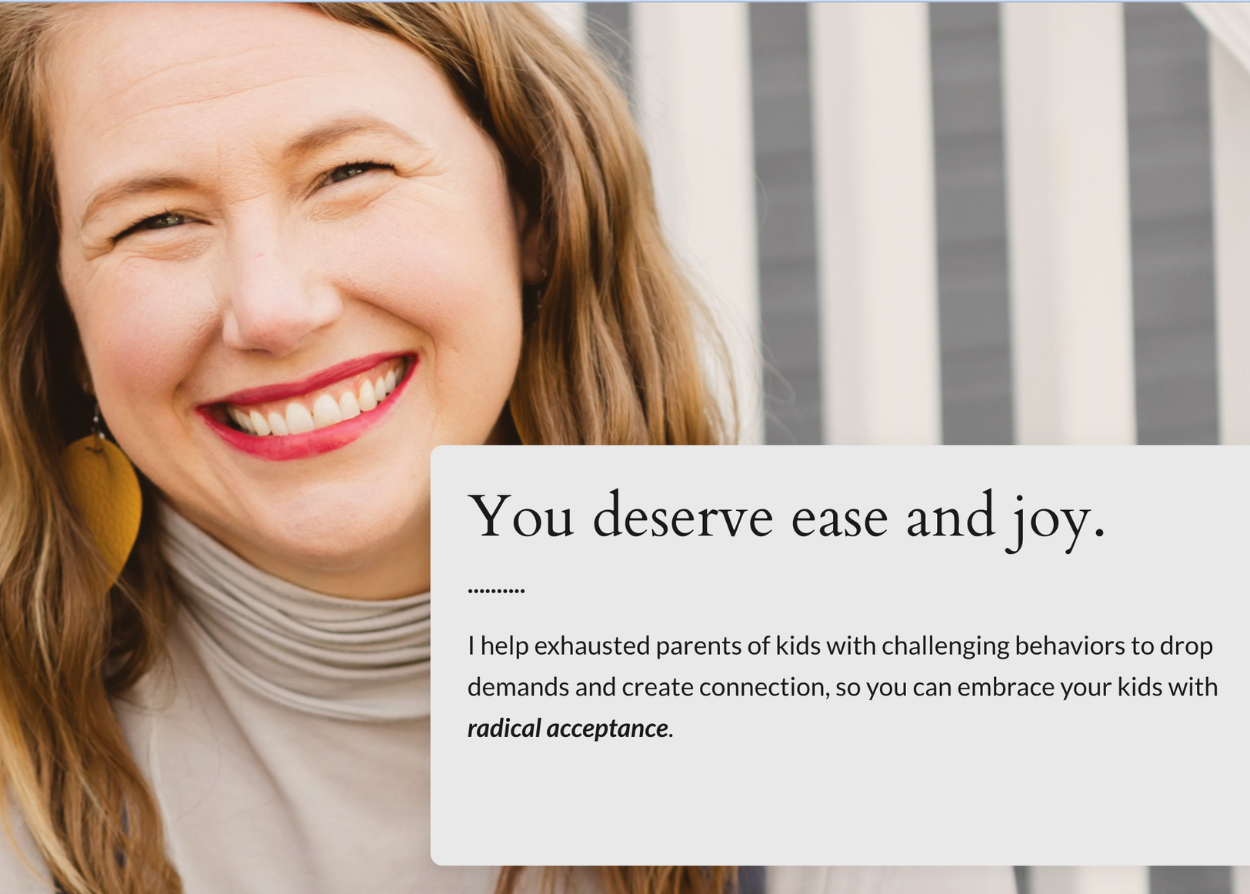
I first came across Amanda Diekman through her book, and to be honest, the first time I read it, before I really understood PDA, it didn’t fully land for me. It made sense on some level, but I hadn’t yet connected it to what we were actually living day to day.
It wasn’t until I saw her speak at the PDA North America Conference in 2025 that something shifted. I could finally connect the face to the work, and from there I started following her more closely, especially on social media, where her message began to resonate at a much deeper way.
Her Low Demand Parenting approach gave me something I could actually do in the middle of hard days. Not as a strict method, but as a shift in how I understand and move through daily life. What I appreciate most is how clearly she defines what demands really are. Not just the obvious ones, but the subtle, often invisible pressures that can build up and push a nervous system past its limit.
She leans heavily into radical acceptance, and that comes through in the way she speaks and teaches. As someone who also identifies with a PDA profile, there’s a level of compassion and understanding in her work that I can feel in my body. It helps me slow down, soften, and approach both my child and myself with more care.
This book on Radical Acceptance by Tara Bach is referenced in both Amanda and Casey’s work. I have read it as well and highly recommend!
I have taken Amanda Diekman’s course on Low Demand Medication which is something most parents with differently wired kids navigate. The content is truly unique to her philosophy and expanded my knowledge with out of the box strategies to help make medication accessible when its not.
Reducing demands sounds simple, but in practice it touches everything, routines, expectations, even the way you phrase a sentence. Her work helped me see how many layers of pressure were embedded in our day, and how much relief came from easing back.
3. Casey Ehlritch – At Peace Parents / The Paradigm Shift
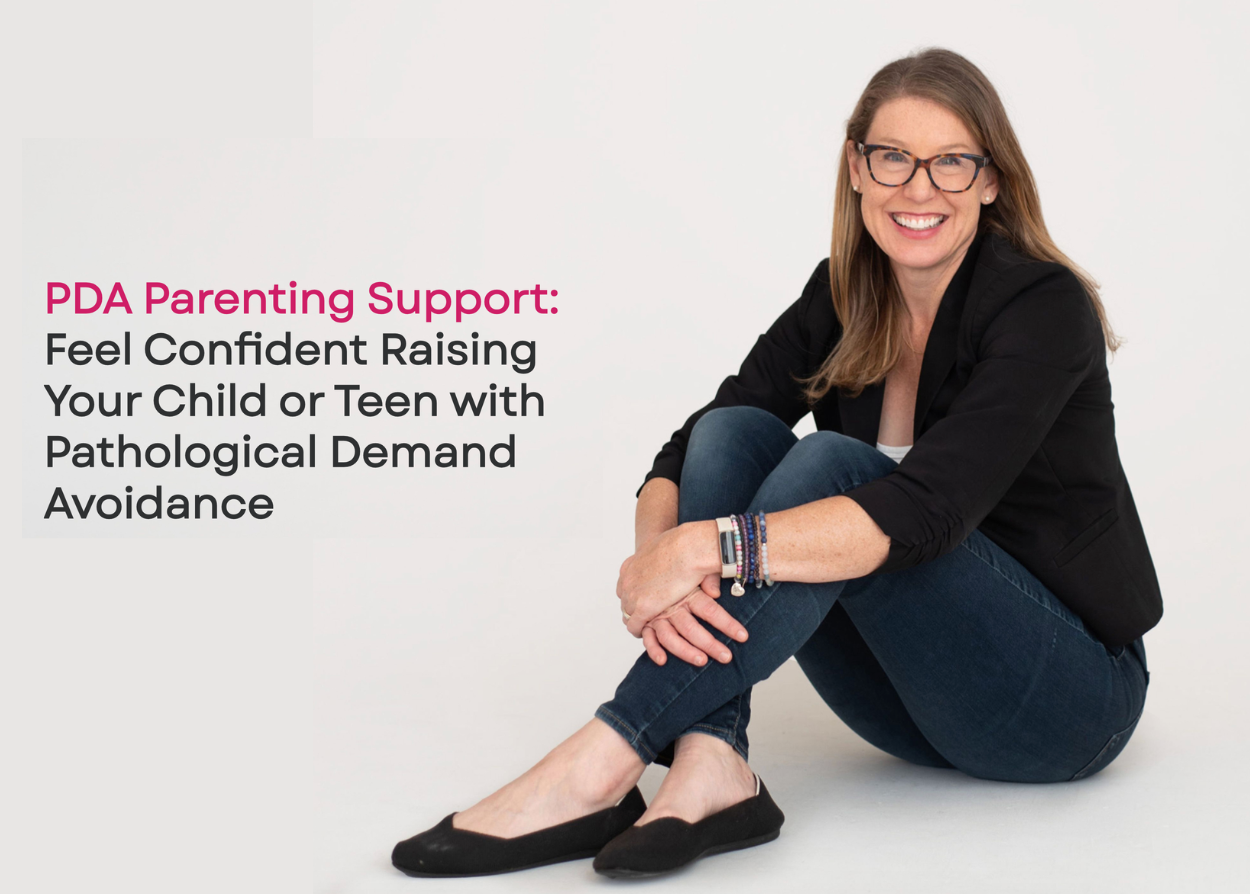
Casey Ehrlich’s work was one of the first places where things really started to click for me. Her “Paradigm Shift” is exactly that, a full reworking of how you understand behavior, especially if you’ve been trying all the traditional and even gentle parenting tools and nothing is landing.
She offers a handful of really helpful webinars for free on her website, and it was actually her webinar on PDA and school that helped me see more clearly what was going on with our son. That clarity ultimately led us to make the decision to withdraw him, which was not something we took lightly, but it became obvious once we could finally name what we were seeing.
Thinking of unschooling your PDA kid? I highly recommend reading this book.
Casey talks a lot about moving out of compliance-based parenting and into a nervous system framework, where what looks like refusal or defiance is actually a stress response. Her approach helped me recognize how often I was unintentionally adding pressure, even when I thought I was being supportive.
At the same time, her personality can feel a bit strict for me, and I’ve naturally found myself leaning more toward the tone and energy of Shoshana and Amanda. But even with that, I can’t overstate the value of her work. When we hit a particularly hard stretch in the fall of 2025 and medication was no longer an option, I purchased her full course, and it’s unlike anything else I’ve come across.
The depth of research and the way she lays everything out is incredibly thorough. It goes far beyond surface-level understanding and into the kind of detail that actually satisfies my need to fully grasp what’s going on. In many ways, her background in more traditional parenting before her own child’s burnout makes her perspective especially accessible for people who are just starting out. It also gives me language and scripts to explain our experience to others in a way that more typical families can understand.
Her course is extensive, and even includes a private podcast feed, which has been something I return to often. I also regularly listen to her public podcast and follow her content online.
4. Robyn Gobbel: Raising Kids with Big, Baffling Behaviors (and The Club)
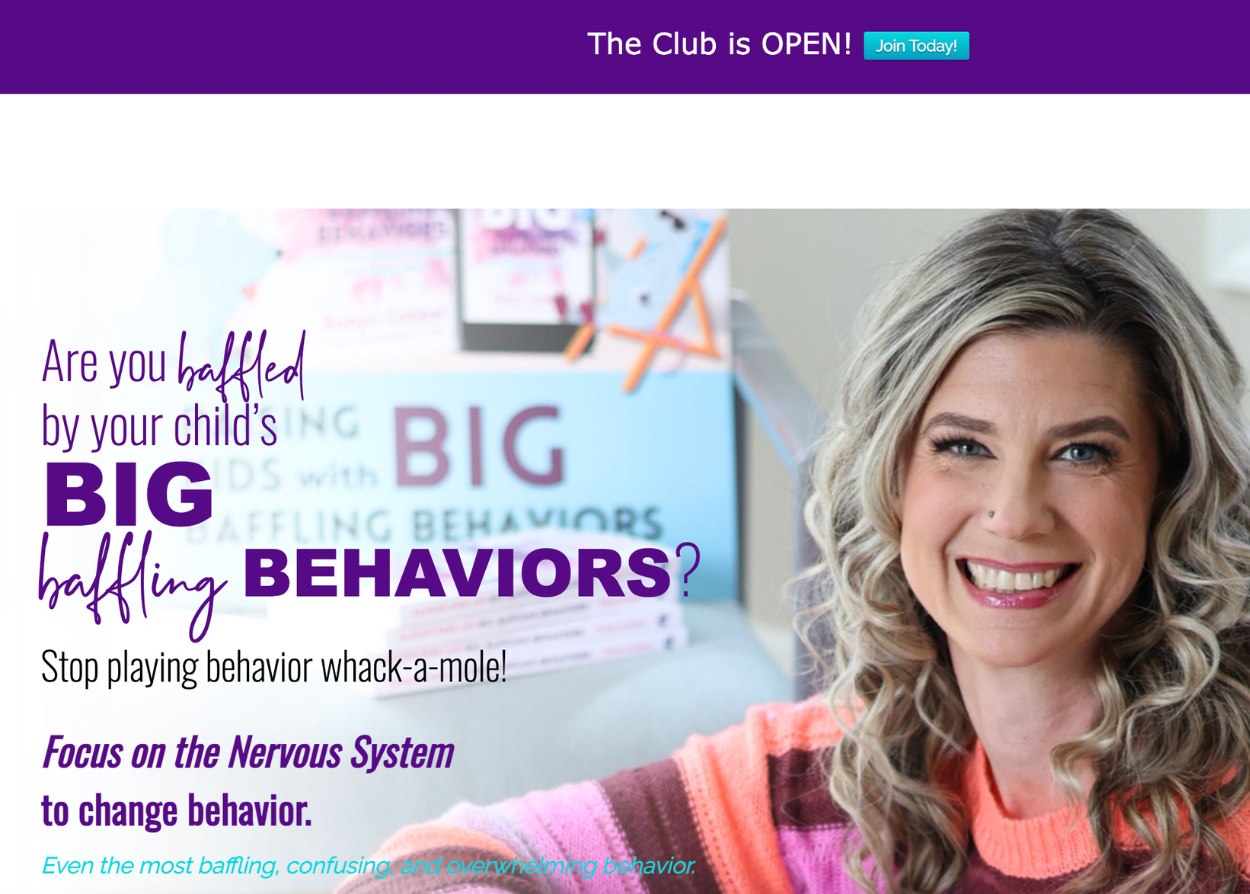
Robyn Gobbel’s work has so deeply shaped the lens through which I understand behavior that it actually takes effort to remember where it all began. It feels like her frameworks have just become part of how I see my child, and myself, now.
I was first introduced to her when a mom friend (Shout out to you Amy!!) mentioned her book Raising Kids with Big, Baffling Behaviors. I hadn’t heard of her before, and I don’t even remember what made me decide to get the audiobook, but I did, and I’m so glad I did.
Robyn isn’t specifically in the PDA space. She’s a therapist specializing in complex trauma, attachment, and adoption. During the pandemic, she shifted her work into an online model, creating a membership community called the Club, (which I am part of) so she could reach more families beyond traditional therapy.
What stands out in her work is how she translates complex brain science into something you can actually use in real life. Her analogies around different brain states, Owl Brain, Watchdog Brain, and Possum Brain, have become a constant reference point for me. They give language to what’s happening in the moment, without blame or urgency to “fix” anything.
Instead of seeing behavior as something to correct, she frames it as a signal of dysregulation. That shift alone has changed how I respond, especially in moments that used to feel confusing or overwhelming.
Her membership community, The Club, offers a space to keep learning and revisiting these ideas over time. It’s not about getting it right all at once, but about slowly building understanding in a way that sticks.
5. PDA North America: Education and Advocacy
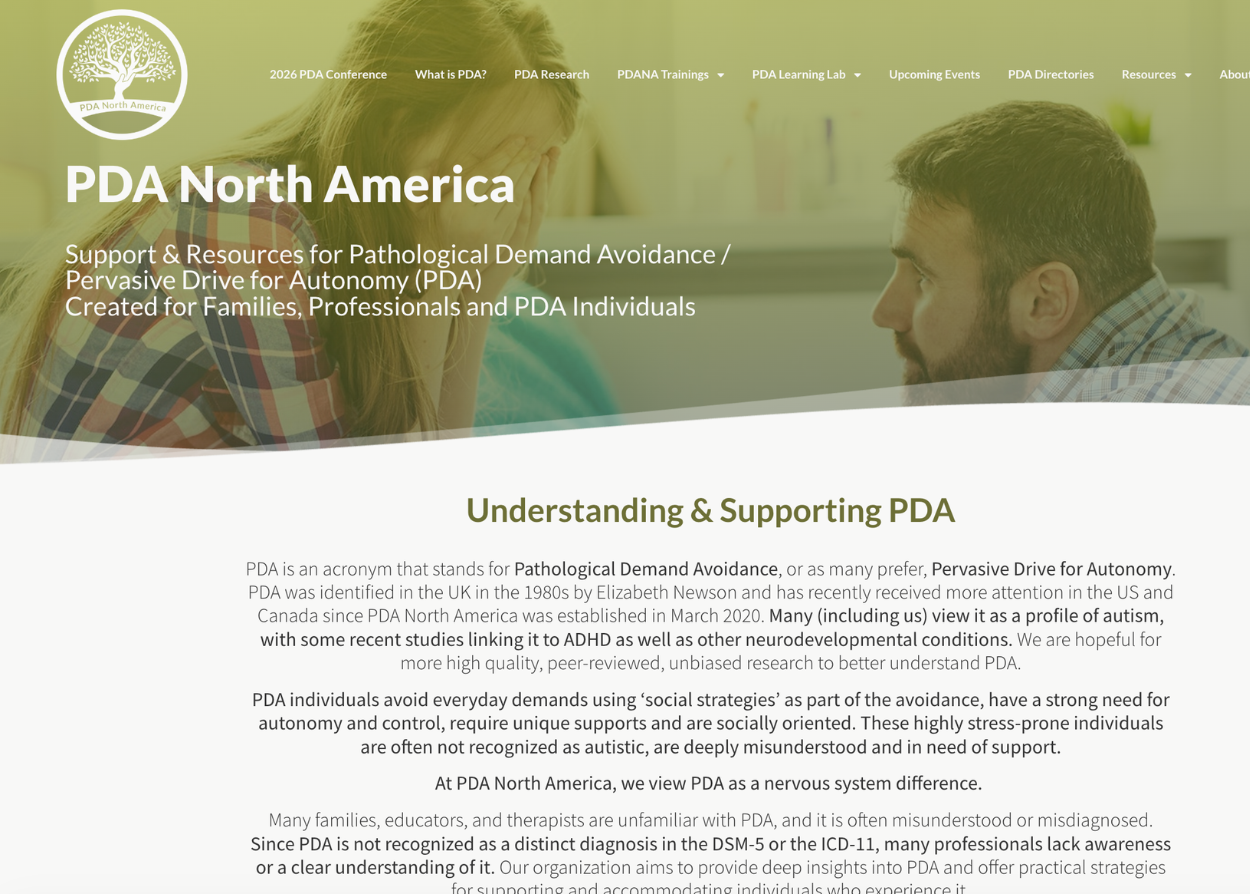
PDA North America offers webinars, articles, and fresh updates on PDA for families in the U.S. and Canada. It’s a resource for navigating schools, therapists, and just understanding current terminology.
I keep turning to their resource hub and events when I need a wide-angle view of PDA, policy updates, or ideas for advocacy letters and IEP help (for when my child was at school).
PDA North America is a great place to direct family members who don’t quite understand what PDA is or acknowledge its validity as a diagnosis.
6. Mothers Together: Support and Connection
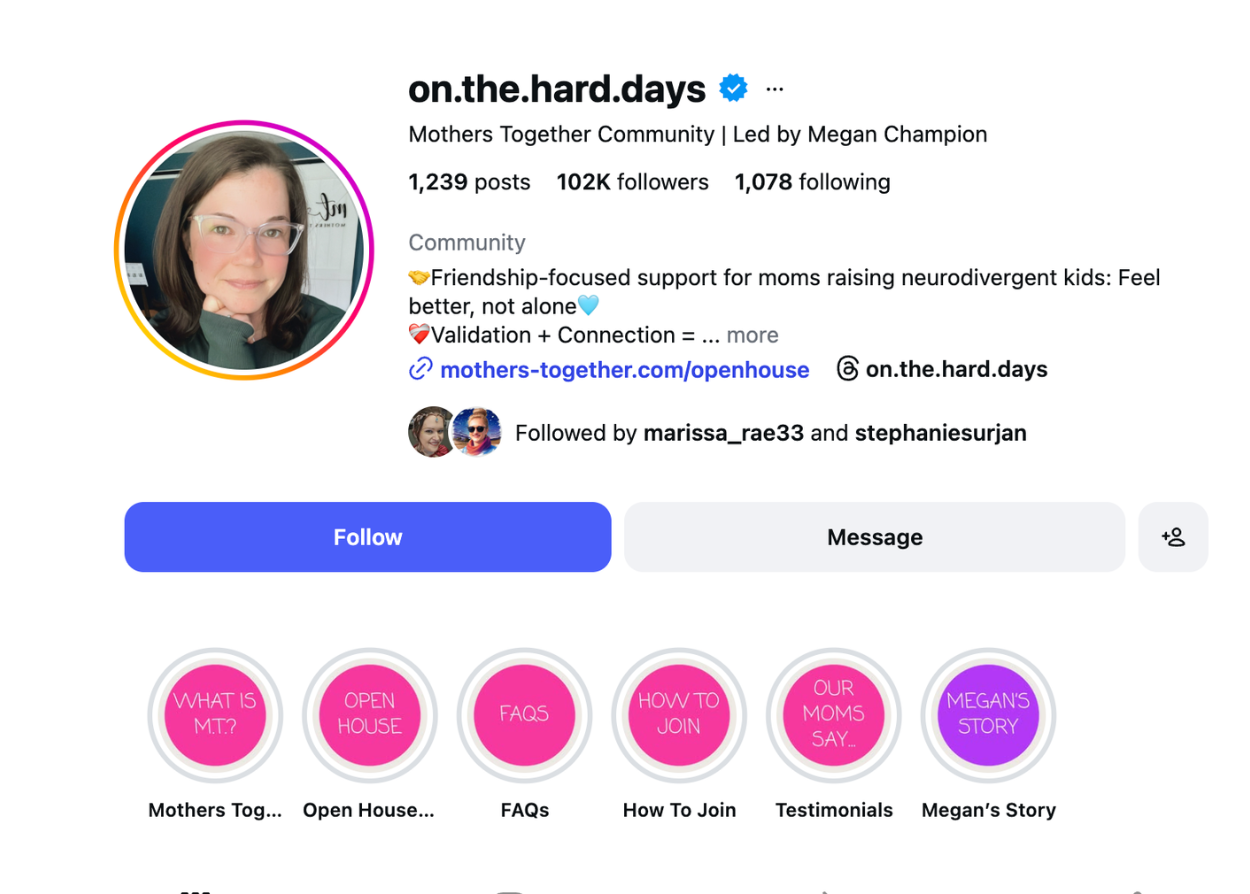
While books and expert guidance have helped me in so many ways, nothing compares to being connected with other moms who are living this every single day. Mothers Together has been that space for me.
I found it in January 2025 after stumbling upon Megan, the founder’s podcast, On the Hard Days. I had never felt so validated listening to someone speak. At the time, we had just received a formal diagnosis for our son, and I was in a period of intense learning, trying to understand neurodiversity, the school system, and how to actually parent in a way that worked for our family. Hearing her share her own story, and bring on other moms to share theirs, made me feel less alone in a way I hadn’t experienced before.
Through the podcast, she talked about the Mothers Together community, and I decided to explore it. They offer open houses where you can sign up for free, see how everything is set up on Marco Polo, meet other parents, and be guided by a group mentor who walks you through the experience. It made stepping in feel really approachable, not overwhelming.
After joining, I filled out a questionnaire and was matched with six other moms across the U.S. and Canada, though there are members all over the world. And truly, it has been such a gift. We talk every single day. We share the most honest, sometimes hardest parts of our lives, and we celebrate the smallest wins that no one else might understand. We’ve even organized meetups to see each other in person.
There’s something incredibly powerful about being in a space where you don’t have to explain or justify anything. They just get it. Every hard day feels a little less heavy because I know they’re there, and that they accept my child and my family exactly as we are.
They also offer topic threads, ongoing discussions, and regular online talks, but for me, it’s the daily connection that has made the biggest difference.
Final Thoughts: Growing Alongside Your PDA Child

Parenting a PDA kid is full of ups and downs. Some days I have resources to share, and other times just making it through and winding down comes first. It’s been important for me to allow myself rest, to reach out, and to keep learning along the way. Each resource above gave comfort, connection, or clarity just when I needed it, and I truly hope they bring you support and peace along your adventure with your PDA child.